Case study
Influencer commerce platform
Audit to deployment for a creator commerce product.
Manoj Sravan · 7 min read · Mar 23, 2026
- Product consulting
- Marketplace delivery
- Platform integration
- Technical leadership
- Confidential client work
- Growth engineering
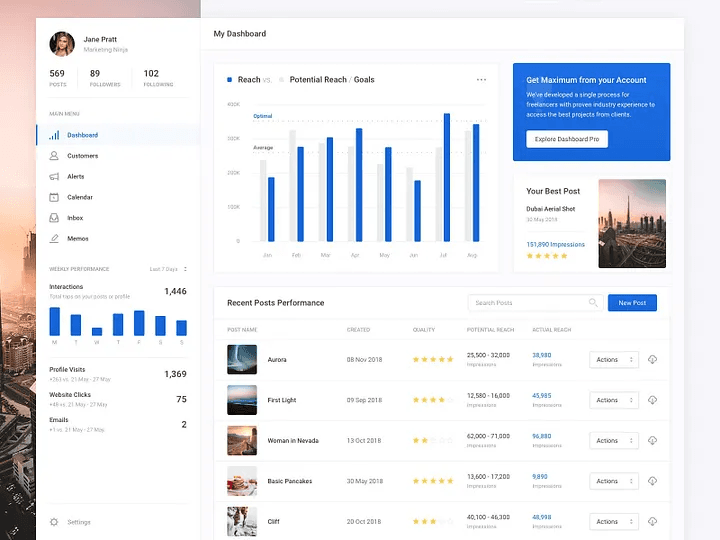
Influencer marketing suffers from fragmentation: brands in one tool, creators in another, payments and analytics in more disconnected surfaces. This piece follows the arc from audit to deployed product (design system, feature architecture, integrations, iterative deployment) for a dual-sided marketplace serving brands and creators.
The work spanned multiple verticals, including merging an existing community platform into the new experience: both a greenfield build and a careful integration exercise.
The problem
On day one there were two codebases: a campaign management tool with rough early UX, and a standalone community app with its own identity and backend. The mandate: audit both, redesign the experience, and ship a unified product.
The goal wasn’t to build features. It was to make two disconnected products feel like one inevitable experience.
Phase 1: Design audit
The audit covered information architecture, visual consistency, interaction patterns, and technical feasibility across both products.
Key findings
- IA: navigation three to four levels deep with no clear mental model per user type.
- Visual fragmentation: multiple button styles and type scales, no shared token system.
- Onboarding drop-off: long multi-step forms without progress or contextual help.
- Data gaps: dashboards showed vanity metrics without campaign-level breakdowns stakeholders needed.
The audit drove prioritisation: a phased roadmap to stabilise brand-side flow, ship the influencer storefront, then merge the community product.
Phase 2: Brand-side
Authentication & onboarding
Login and signup support SSO (Google, LinkedIn) and OTP email. Brand signup became three clear steps with progress indicators and inline validation to cut abandonment.
Content management system
A hierarchical CMS for catalog structure: categories, subcategories, product attributes, media. CSV bulk upload for large catalogs and a real-time preview panel before go-live.
Form builder for lead collection
Configurable forms attached to products or campaigns (text, dropdowns, checkboxes, multi-select), validation, GDPR consent in schema by default. Submissions stored relationally with custom event instrumentation.
Campaign creation wizard
End-to-end wizard for goals, pricing models (CPC, CPV, CPP, CPCall), budget, targeting, and scheduling. Unique affiliate links per product-campaign pair with shortening and UTM injection for attribution.
Influencer discovery & collaboration
AI-assisted discovery filtered by niche, audience size, engagement, geography; invite flows with briefs; recommendation logic from historical campaign performance.
Campaign dashboard & fraud detection
Real-time monitoring for clicks, views, conversions, ROI at campaign and per-influencer level. Anomaly detection on traffic patterns and velocity to catch fraud before spend runs away.
Phase 3: Creator-side
Influencer onboarding & storefront
Social OAuth to verify handles and pull follower counts. Storefront builder from vertical templates (fashion, services, real estate, etc.) with visual editor; responsive storefronts linkable from bios. Template system component-driven so new layouts ship without creator-side code changes.
Campaign marketplace & analytics
Creators browse campaigns by niche, payout, category; accepted campaigns get scoped affiliate links; activity flows to creator and brand dashboards via UTM. Earnings consolidate campaign, storefront, and community revenue with payouts and settlement windows.
Phase 4: Community merge
The hardest phase: merging a standalone community app (own API, data model, and users) into the main product without breaking active usage.
Integration strategy (layered, not big-bang)
- Community API endpoints abstracted behind a unified gateway.
- Community UI re-skinned to the new design system while preserving behaviour.
- Deep links so creators move between storefront and community without session loss.
- WebSockets for posts, polls, and drops; paywalls wired to shared payment infrastructure.
- Lightweight LMS: courses, modules, assessments; subscription tiers; events in the same analytics suite.
Stack and architecture
- Frontend: React · API: Node.js · Relational: PostgreSQL · Documents: MongoDB
- Real-time: WebSockets · Auth: OAuth 2.0 · Payments: Stripe
- Attribution: custom UTM engine · Recommendations: ML (TensorFlow) · Events: Mixpanel-style instrumentation
- Fraud: anomaly / ML-assisted detection · API gateway essential for community merge and shared session
Transactional data lived in Postgres; flexible hierarchies (e.g. CMS) in a document store. A custom event wrapper fed both product analytics and attribution to avoid double-counting.
Deployment & iteration
Incremental milestones with internal testing and limited creator beta. Feature flags for rollout and rollback. Post-launch: budget forecasting in the wizard, new storefront verticals, clearer settlement timelines, fraud threshold tuning after false positives.
Outcomes
Dual-sided marketplaces with embedded community are a different challenge than single-persona tools: every decision has dual implications for brand vs creator.
The hardest problems weren’t technical. They were about making two products with different histories feel like they were always meant to be one.
Audit-first prevented building on structural sand. Treating community migration as its own product (scope, timeline, comms for users) is a principle I carry forward.
Design direction drew inspiration from Jan Losert’s work. Due to NDA and compliance, actual product screens and client deliverables are not shown here.
Highlights
- Unified two products into one coherent experience
- Shipped brand CMS, campaign wizard, creator storefronts, and community integration
- Feature-flagged rollout with measurable post-launch iteration cycles